Showing posts with label Forbes. Show all posts

Thursday, October 22, 2020

Will Natural Gas Isolate Turkey And Integrate Israel In The Eastern Mediterranean? - FORBES

Oct 22, 2020,08:44am EDT
Daniel Markind

For generations, the area around the eastern Mediterranean Sea has been filled with turmoil. From the Arab-Israeli conflict to the divided island of Cyprus and the general animus between Greece and Turkey, the region’s problems have seemed intractable.

Over the last decade however, discovery of massive natural gas deposits underneath the eastern Mediterranean Sea are reorienting the entire region. The rush to obtain energy independence and security by discovering and laying claim to gas and oil reserves is immensely important to the countries in the region, forcing them to reconsider historical relationships and presenting new possibilities which previously seemed unthinkable. At the same time however, countries like Turkey which refuse to think anew may find themselves left behind. Events are moving at tremendous speed, with much of the region has changed in just the last three months.

Tuesday, February 19, 2019

Israel's Leviathan Energy Prize: Where Will The Gas Go? - FORBES

Feb 19, 2019, 07:35am
Ariel Cohen

Israel is finally emerging as a natural gas player in the Mediterranean. In the last week of January, the Israeli Navy conducted a complex drill simulating attacks on the country’s offshore oil and gas infrastructure. The exercise included coordinated operations between dozens of naval vessels and aircraft, and even incorporated a live-fire missile test against an abandoned cargo vessel (imitating an enemy transport filled with Hamas or Hezbollah militants). Israel’s week-long “Raging Sea” operation comes on the heels of two joint military drills with Cypriot forces held in November and December – presumably to protect the region’s newest and most valuable energy asset – the Leviathan offshore gas field.

The Leviathan falls almost exclusively in Israeli territorial waters, but neighboring states have demonstrated a mutual interest in seeing the reservoir and surrounding plays developed. Indeed, the vast economic potential of Eastern Mediterranean hydrocarbons has galvanized diplomatic and economic ties between Israel, Cyprus, and Greece. In December, the three nations held a trilateral summit in Beersheba, Israel, where they agreed to launch the EastMed pipeline project, a $7 billion endeavor that would see Israeli gas pumped to Greece via Cyprus and Crete at a rate of 10 billion cubic meters (bcm) per annum. Once in Greece, the gas would then connect to the 20 bcm per annum Poseidon pipeline in Italy, and then onward to the rest of Europe.

Wednesday, December 12, 2018

Growing Dependent On Russia: The Gas Routes In Europe - FORBES

Dec 12, 2018, 12:05pm
Annalisa Girardi

This year Italy has become the second largest buyer of Russian natural gas, outdoing Turkey. Rome and Moscow historically have had close commercial ties within the energy sector, being Eni, an oil and gas Italian company and one of the largest multinationals in the sector, the first Western business to become a commercial partner to the Kremlin. This year Italy has become Russia’s second market, buying 18,3 billion cubic meters gas, against the 17,9 billion cubic meters acquired by Ankara. According to Bloomberg, Germany remains far in its first place, with 42,7 billion cubic meters gas purchased from Siberian gas fields.

Russian gas is a precious resource for Italy since it provides more than one-third of its total domestic demand. Natural gas originated in Russia reaches Italy mainly through the Trans Austria Gas (TAG) pipeline, a 380 kilometers duct hold at 89% by Eni. At this moment, 40% of national requirements are met by Gazprom, the Russian business that is also a major oil and gas companies worldwide, as well as being state-owned at 50%. The rest of Italian energy needs are mainly covered at 25% by Algeria and at 6% by Libya, while the country imports from Qatar the majority of liquefied natural gas which is later processed at the regasification plants.

Thursday, November 29, 2018

ExxonMobil Commences Drilling Despite Turkey's Verbal Threats - FORBES

Nov 29, 2018, 11:54am
Antonis Antoniou

ExxonMobil XOM +0.56% continues its exploratory offshore drilling in Cyprus’ Exclusive Economic Zone (EEZ) and — contrary to the Cypriot government’s fears — no Turkish ships appeared on the horizon.

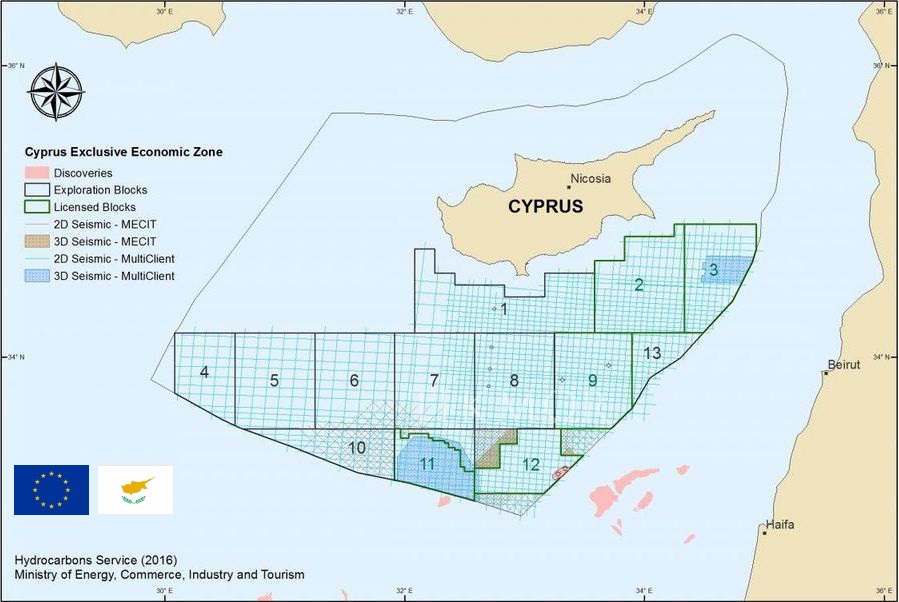
Drillship Stena IceMax entered Block 10 of Cyprus’ EEZ and began drilling a couple of days ago. So far, there has been no actual response from Turkey, even though the government of Recep Tayyip Erdoğan had said that it would “react” to any kind of exploration activity in the Cypriot EEZ.

Turkey has vocally laid claim to parts of Cyprus’ EEZ and even though Block 10 does not fall within one of those areas, Turkey has nevertheless repeatedly warned (or, perhaps, threatened?) that it would react in order to protect the rights of Turkish Cypriots.

But there has been no action by Turkey so far to prevent ExxonMobil’s exploration effort.

Saturday, November 10, 2018

ExxonMobil Could Be In For A Naval Battle - FORBES

Nov 10, 2018, 12:43pm
Antonis Antoniou

As the Stena IceMax — the drillship that will conduct offshore explorations in Cyprus’ Exclusive Economic Zone (EEZ) on behalf of ExxonMobilXOM -0.02% — approaches its target, anxiety is mounting as to how Turkey will react.

Over the last couple of years, Cyprus has granted specialized companies drilling rights to explore its EEZ, in the hopes of discovering hydrocarbons and, more specifically, natural gas and petroleum. Some of the biggest exploration companies in the world — such as Italy’s ENI, Korea’s KOGAS, France’s Total , and even the U.S.’ Noble Energy NBL -1.41% — expressed interest in this pursuit and received licenses.

Now, ExxonMobil is expected to begin drilling in Block 10 of Cyprus’ EEZ in the coming weeks and Turkey has already warned that it will react to such an action.

Turkey invaded Cyprus in 1974, still illegally holds 36% of the country’s landmass (Note: after chasing away the area's 90% majority Christian population & colonizing it since with Anatolian Muslim settlers) and doesn’t recognize its EEZ, even laying claim to parts of it. Turkey claims that parts of Blocks 1, 4, 6 and 7 fall within its own EEZ and that the Turkish Cypriot community can rightfully claim any possible discoveries within Blocks 1, 2, 3, 8, 9, 12 and 13. Though Block 10 does not fall within one of the aforementioned areas, Turkey has nevertheless warned that it will “react” to any kind of exploration activity.

Friday, April 27, 2018

Lessons In Attracting Upstream Investment Capital - FORBES

APR 27, 2018 @ 05:39 AM

Egypt’s astonishing gas renaissance

Not long ago, Egypt’s gas industry was in crisis. Production fell by a third in the three years to 2015; a top ten LNG exporter in the prior decade, the country had by then become a top ten importer. Nearly all available gas had to be diverted by the Government to serve the domestic market. As a result, export revenue dried up, the cost of gas imports soared and there was insufficient cash to pay contract commitments to E&P investors. Arrears ballooned to US$7 billion, and producers were becoming uneasy. Today, happily, things are very different and investment is flooding back in. What happened to turn things around? Stephen Fullerton, Upstream Research Analyst, identifies two key factors.

Tuesday, May 2, 2017

Noble Firing On All Cylinders With Balanced Portfolio - FORBES

(Photo by Kobi Gideon/GPO via Getty Images)
MAY 2, 2017 @ 11:38 AM 828 
Claire Poole

Noble CEO David Stover met with Prime Minister Benjamin Netanyahu earlier this year about the company's developments off the coast of Israel, where it's exporting natural gas to Jordan for the first time.

Noble Energy Inc. seems to be firing on all cylinders.

The Houston oil and gas explorer reported solid first quarter financial results, beating analysts' expectations for earnings, revenues and production. Its wells in the Delaware Basin in West Texas and the Denver-Julesburg Basin in the Rockies are outperforming expectations and targets and it began exporting natural gas from Israel to Jordan for the first time. The company also is continuing to improve its portfolio, selling natural gas properties in Appalachia's Marcellus Shale to an unnamed buyer for $1.2 billion, which will help it pay down debt incurred after its $2.7 billion purchase of Clayton Williams Energy Inc.

Tuesday, December 6, 2016

Russia Closing In On 'Alt-Ukraine' Pipeline In Turkey - FORBES

Gazprom CEO Alexei Miller (L) speaks with Turkish Energy Minister
 Berat Albayrak (R) (Photo by OZAN KOSE/AFP/Getty Images)
DEC 6, 2016 @ 11:25 AM
Kenneth Rapoza

Call it the anti-Ukraine pipeline, but after some fits and starts the alternative Russian gas route into the E.U. via Turkey is about to be made official on Tuesday in Moscow.

Turkey's Prime Minister Binali Yildirim arrived in the city today for a two-day visit at the invitation of his Russian counterpart Dimitry Medvedev. According Turkey's Daily Sabah newspaper, Yildirim is also scheduled to discuss the Turkish Stream pipeline deal with Vladimir Putin. The Gazprom-Botas Petroleum pipeline was proposed last year by both governments but fell apart after the Turkish military shot down a Russian fighter plane over Syria. Relations were put on ice and have since thawed. The pipeline deal is the manifestation of cooler heads prevailing between the two old allies.

Friday, December 2, 2016

Israel's Navy Sub Scandal Widens; Iranian Ties And Deal-Making Questioned - FORBES

The German-made INS Rahav, the fifth Israeli Navy submarine, arrives at the military
port of Haifa on January 12, 2016. In September 2015, Israel received delivery of the
fourth Dolphin 2 class submarines from Germany. A third of the cost was funded by
Germany as part of its military aid to Israel. The submarines, the most sophisticated in
Israel's fleet, can be equipped with missiles armed with nuclear warheads.
(Photo JACK GUEZ/AFP/Getty Images)
DEC 2, 2016 @ 11:05 PM
Tim Daiss

In a convoluted development intersecting the energy sector and Middle Eastern geopolitics, media in Israel is reporting that Israeli Attorney General Avichai Mandelblit has ordered a police probe into allegations that Israeli Prime Minister Benjamin Netanyahu’s personal lawyer, David Shimron, used his close relationship with the Israeli leader to influence him to award a $1 billion contract to build three navy submarines to ThyssenKrupp, a German multinational conglomerate with a 4.5% ownership stake held by the Iranian government.

The subs will be used to protect Israel’s massive offshore natural gas field in the Mediterranean. According to a report on Friday in The Times of Israel, Shimron was a representative of the company in Israel. The inquiry will also focus on a separate 2014 Defense Ministry tender for navy ships, also involving ThyssenKrupp.

Tuesday, November 29, 2016

BP Enters Zohr "Super Giant" Gas Field as Eni Cuts Stake - FORBES

CEOs Claudio Descalzi (ENI); Emilio Lozoya (Pemex); Bob Dudley (BP),
Amin H. Nasser (Saudi Aramco), Patrick Pouyanne (Total) 
NOV 29, 2016 @ 07:42 PM 
Christopher Coats

After leading the discovery of the Zohr field, Italy’s Eni has signaled its intention to reduce its stake in the field to about 50%, starting with the sale of a 10% stake to BP for $375 million.

Billed as the largest natural gas discovery in the Mediterranean in the last decade, the Zohr offshore field near Egypt has attracted intense interest from companies hoping to make the most out of the region’s new-found energy potential. According to earlier reports, the “super giant” field could be home to an estimated 30 trillion cubic feet of natural gas.

However, Eni appears ready to reduce its exposure to the effort, telling media outlets that it feels it can manage the project with a smaller stake.

Sunday, October 30, 2016

While Cyprus Awaits Gas Future, It Explores Shorter Term Solutions - FORBES

OCT 30, 2016 @ 05:37 PM
Christopher Coats, CONTRIBUTOR

Still years away from exploiting its own natural gas potential, Cyprus is now reviving efforts to nail down import options to help the country meet its climate targets through liquefied natural gas projects.

According to media reports, Cyprus is preparing to launch a study into importing LNG to help meet the country’s domestic demand and ease the planned transition towards lower emissions power production.

“The objective of the study is, based on the analysis of the various options of LNG supplies, to identify and propose an option/project, an appropriate process and a timetable for the supply of gas to Cyprus [as soon as possible] and before 2020,” according to a tender released by state-owned Natural Gas Public Co.

Wednesday, September 28, 2016

Egypt Announces Progress on Cuts to Costly Fuel Subsidies - FORBES

SEP 28, 2016, Christopher Coats, CONTRIBUTOR

Two years after launching a concerted effort to sharply reduce subsidy programs that had proven unsustainable to the country’s government, Egypt has announced significant progress in the reduction effort, reporting a 28.7% drop in spending during the 2015-2016 fiscal year.

According to a Reuters report, the country’s Petroleum Minister Tarek El Molla said that the reported reduction represented a larger decline than previously announced.

Coupled with myriad other financial challenges facing the country, energy subsidies have proven especially difficult to manage or reduce in recent years, creating an enormous challenge for the government’s attempts to draw down its daunting debt.

Israel Faces Gas Export Challenge - FORBES

SEP 28, 2016 @ 12:31 PM, Yakir Gillis, CONTRIBUTOR

Despite promising potential reserves and a favorable regulatory framework, Israeli offshore gas exploration is a tough sell.

Israel has been looking to develop its huge offshore gas resources after a period of regulatory uncertainty, but the challenges surrounding the construction and security of export pipelines may put off all but the most forward-looking investors.

Israel has one of the biggest gas reserves in the eastern Mediterranean basin, the Leviathan field, which could in time turn it into a major regional energy player. However, getting the gas out of the ground has been dogged with problems. Chief among them was an antitrust ruling stemming from concerns that the two main exploration companies, Texas-based Noble Energy and Israel’s Delek, stood to monopolise the country’s natural resource sector.

Thursday, July 28, 2016

Egypt Expands Efforts to Address Natural Gas Demand - FORBES

JUL 28, 2016 @ 08:33 PM
Christopher Coats, CONTRIBUTOR

In hopes of reviving its oil and gas production efforts, Egypt has signed exploration agreements with Cypriot and U.S. firms to assist with onshore projects.

According to media reports, Cairo signed deals with IPR and Cypriot subsidiary Mediterra to help the country reach new production goals, specifically focusing on three exploration wells in sectors 7 and 8 in southern Egypt.

The deals come as Egypt continues to push for a revival of its energy production sector, which largely collapsed following the fall of the Mubarak government in 2011. Since then, Egypt has struggled to meet its rising energy needs, resulting in mounting debt to foreign producers and efforts to curb usage and subsidies to consumers.

Saturday, April 30, 2016

New Estimate Lowers Offshore Potential at Israel's Leviathan - FORBES

APR 30, 2016
Christopher Coats , CONTRIBUTOR

A new estimate of Israel’s offshore Leviathan field shows a far more conservative outlook for the country’s natural gas potential, possibly eating away at the country’s export plans.

According to a Platts report, the new estimate reduces a previous assessment of the field’s potential by almost a quarter to 16.6 Tcf, threatening to reshape the country’s plans for moving natural gas beyond its own borders.

Israel has previously established allowable amounts of natural gas to be exported from the country’s offshore efforts, establishing a minimum for domestic use. Since then, the country has worked to establish potential new trade partnerships with regional neighbors and possible links with the broader European market.

At the same time, Europe has looked to explore potential new import efforts with Eastern Mediterranean producers like Israel as it hopes to reduce its current dependence on Russian natural gas.

Sunday, February 28, 2016

Israel Looks to Mediterranean Gas as Stabilizing Force in the Region - FORBES


FEB 28, 2016, Christopher Coats

Israel’s minister of infrastructure, energy and water, Yuval Steinitz promoted the idea of Eastern Mediterranean natural gas a stabilizing force in the region this past week, in remarks made at the IHS Energy CERAWeek in Houston.

The minister suggested that natural gas produced in the region and a functioning transport infrastructure could ease regional tension by providing ample energy resources to all those countries in need of it.

“I think it might serve stability at least in part of the Middle East,” said Steinitz.

Sunday, February 7, 2016

Turkey's Rising Natural Gas Demand Needs U.S. LNG - FORBES

Turkey’s Natural Gas Imports are Surging, Sources: EIA; JTC
FEB 7, 2016
Jude Clemente , CONTRIBUTOR


The ongoing tension between Turkey and Russia makes Turkey’s dependence on foreign energy perhaps the country’s biggest concern. And this begins with natural gas, which passed oil in 2012 to become Turkey’s main source of energy. Turkey imports 99% of its gas, and Russia pipes in nearly 60% of Turkey’s total gas use.


Turkey is the second largest consumer of Russian gas and paid Gazprom some $10 billion last year. Iran supplies 20% of Turkey’s gas and Azerbaijan 10%, all via pipeline. LNG, mainly from two countries (Algeria and Nigeria), supplies about 13% of the country’s gas. As an OECD Member, and thus a member of the IEA, Turkey has been advised to diversify away from Russian gas, and Russia may also be looking elsewhere (e.g., China, India) in its response to the downing of its warplane by Turkey in November.

Thursday, December 31, 2015

Petroceltic moves to restructure Mediterranean footprint | Forbes


December 31, 2015, Christopher Coats

The sustained decline of global oil prices is forcing one company to reassess their position in the Eastern Mediterranean, despite strong potential in neighboring projects.

According to media reports, Petroceltic has initiated a “strategic review” of its operations and assets to address looming debt payments in the New Year.

Specifically, this includes efforts in Egypt and Greece in hopes of dealing with the more than $200 million in debt it currently faces.

For the company’s presence in Egypt, this means the sale of its interests in the North Thekah, North Port Fouad and the onshore South Idku licenses to joint partner Edison International.

According to a company statement, the “transaction remains subject to the receipt of Government approvals and the waiver of pre-emption rights held by the Egyptian Natural Gas Holding Company (“EGAS”) and is expected to complete in the first quarter of 2016. The sale of these interests will reduce Petroceltic’s exploration expenditure obligations in 2016 by approximately US$20 million. Petroceltic expects to record a loss of approximately $1.5 million on this transaction and the proceeds of the sale will be applied to repayment of debt.”

The exit comes at a time when Egypt’s natural gas fortunes appear to be improving after several years of declining output and mounting debt. Earlier this year, Italy’s Eni announced the discovery of a “super giant” offshore well that some have argued could reshape the region’s energy landscape.

According to a Bloomberg report on the discovery, Eni outlined a potential “super giant” field that could potentially be home to 30 trillion cubic feet of gas, making it the biggest find in the Mediterranean. The discovery was initially thought to provide significant momentum to regional energy development, especially among those operating in Egypt.

However, that push may have come too late for Petroceltic as the company looks for lucrative means to exiting the country to address its debt obligations.

For the company’s efforts in Greece, this means taking leave from its interest in the Patraikos license in the Gulf of Patra.

SOURCE

Wednesday, December 30, 2015

Eni extends gas agreement in Cyprus | Forbes


DEC 30, 2015, Christopher Coats , CONTRIBUTOR

Full of confidence from a recent offshore discovery in the Eastern Mediterranean, Italy’s Eni has announced the extension of an exploration agreement with Cyprus, extending the company’s footprint in the region.

According to local media reports, the Cypriot energy minister announced that it will extend its agreement with Eni and its South Korean partner KOGAS to explore offshore potential for natural gas of the country’s southern coastline.

The extension would take the partnership into at least early 2018, with exploratory drilling expected to begin in 2017.

For Eni, the partnership expands the reach of the Italian energy firm in the region just months after announcing that they had discovered what it feels could be the largest in recent history. The “super giant” gas discovery holds an estimated 30 trillion cubic feet of gas, making it the biggest find in the Mediterranean and possibly transforming the entire energy landscape of the region.

For Eni, a find of that size was expected to help justify its efforts in the region, providing with significant potential revenues for both sale into the Egyptian market and the export market. The extension of the Cypriot agreement supports that possibility.

For Cyprus, the announcement reiterates the country’s efforts to establish itself as a production and transport leader in the region, further expanding its collaborations with foreign partners. Earlier this year, Cyprus announced that they had also extended an agreement with France’s Total.

Earlier this year, Eni also came out in support of Cyprus being viewed as a likely strategic energy hub and “conduit for future Egyptian natural gas supplies”, tying together the efforts of the company’s regional efforts.

“Eni believes in the significant synergies of joint development in the entire area of the eastern Mediterranean,” the company said in a statement, according to UPI. “This area could be of crucial strategic importance as a gas hub for the whole region and also makes an important contribution to European energy security.”

SOURCE

Monday, November 30, 2015

Egyptian Oil Continues To Slide, But Improvement On The Horizon | Forbes


Egyptian Oil Continues To Slide, But Improvement On The Horizon


I write about energy and policy issues facing the Mediterranean region

According to local media reports, Egypt’s oil exports have continued to slide amid growing domestic and demand and local production that has suffered due to regional instability.

Citing the country’s Central Agency for Public Mobilization and Statistics, oil exports decreased by 38% during August, while imports continued to climb for the same period last year.

The results come as Egypt continues to try to address domestic demand and production challenges, including a substantial debt to foreign producers that grew to several billion over the last several years.

In addition to reducing unsustainable energy subsidies for domestic use, Cairo has moved to increase hydrocarbon production locally, including significant offshore efforts in hopes of eventually reducing costly dependence on foreign producers.

Most notably, the country announced in late August that Italy’s Eni had discovered a “super giant” offshore gas field that could potentially be home to 30 trillion cubic feet of gas, making it the biggest in the Mediterranean.

For Egypt, the successful development of the field would put them on track to join in on a burgeoning energy production push in the Eastern Mediterranean, previously led by Israel and, to some degree, Cyprus. Further, the field would play a significant role in supporting Cairo’s efforts to increase domestic energy production to meet surging domestic demand.

In recent years, Egypt has faced substantial challenges to meeting its energy needs as political and financial instability have threatened local production and made it difficult to afford costly imports without accruing large foreign debts. While small discoveries have provided Cairo with some momentum towards attracting the interest and investment necessary to move towards its energy goals, a discovery of this stature could be the key to overcoming any doubt among potential investors.

The successful development of any of the country’s oil or gas efforts would be a significant step forward for an economy that has suffered since the collapse of the government of Hosni Mubarak in 2011. With the dissolution of his government, the country’s economy has suffered amid financial and security uncertainty and often unmanageable energy sector debt.

The report did note that consumption of both oil and gas actually fell in September, sliding slightly below where it stood for the same period in 2014.