PM argues the need to develop additional gas fields, revealing that Israel's power plants were hit with rockets in the past, and a lone gas rig could face a similar threat.
Roi Yanovsky, Yael Friedson
Published: 12.08.15, 13:40 / Israel News
Prime Minister Benjamin Netanyahu testified on Tuesday in front of the Knesset's Finance Committee, defending the government's natural gas plan.
Specifically, the prime minister was called to defend Clause 52, that enables the government to bypass the anti-trust regular's authority in approving the gas plan.
Netanyahu claimed in his testimony that the proposed plan was vital for the existence of the State of Israel, as it would ensure the country's energy security.
Netanyahu claimed in his testimony that the proposed plan was vital for the existence of the State of Israel, as it would ensure the country's energy security.
 |
| Prime Minister Netanyahu and Energy Minister Steinitz at the committee hearing (Photo: Knesset Spokesman) |
He disclosed that Israel's power plants were hit in the past by rockets launched by terror organizations, arguing that the development of additional gas fields is necessary to lower the threat on Israel's energy resources.
"Without supplies, we would not be able to operate electricity systems, and when electricity systems go down, they bring down the entire country. We've witnessed it during storms. People wouldn't be able to heat up their homes," he said.
"No one thought for a moment to put all of the country's power plants in one place," Netanyahu continued. "Imagine we join all the plants to one. Take, for example, the Hadera power plant. That place, like others, was hit by rockets. It is dangerous and irresponsible. The rockets are just going to become more advanced," he said.
During Operation Protective Edge in 2014 and Operation Pillar of Defense in 2014, terror organizations in the Gaza Strip tried to fire rockets at facilities of the Eilat Ashkelon Pipeline Company in southern Israel and at the Ashkelon power plant, and were able to hit the power plant several times.
The rocket fire at the Ashkelon power plant caused damage, but did not paralyze or significantly disrupt the plant's operations.
"The most vulnerable thing is the gas rigs, it's more vulnerable than a gas pipe because they can be hit by rockets. The plan is a way to create reserves and have several fields rather than have just one field that would be under threat and very dangerous," the prime minister explained.
He also asserted that "the natural gas provides Israel with a much stronger and sturdy base against international pressures," adding that there are already talks with Ankara about importing Israeli gas to Turkey.
Responding to claims from members of the committee that the plan would hurt competition in the natural gas market, Netanyahu said that "if we do not approve the plan, we'll remain without competition, without gas fields, without energy security and without the ability to export. I've seen supervision over prices, and that does not appeal to investors."
He warned of Israel becoming "a state of over-regulation," asserting that "the incessant interference gives the Israeli economy a bad name, and I'm not just talking about the energy sector."
Netanyahu took on the authorities of the Economy Ministry after Shas chairman Aryeh Deri, who refused to sign off on the clause bypassing the anti-trust regulator, had to resign from his role at the head of the ministry.
While Netanyahu was testifying, protesters against the gas plan gathered outside the Knesset, where the committee was holding its discussion, and outside the Prime Minister's Residence in Jerusalem, demanding the Knesset not to approve the plan.
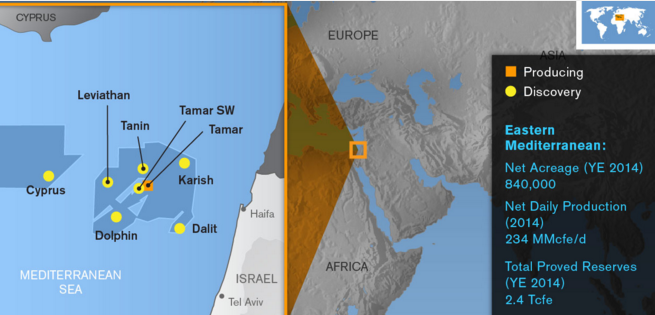
Under the proposed gas plan, Israel's Delek and Texas-based Noble Energy, which own a number of recently discovered gas fields that supply factories and Israel's electric company, will continue to own Israel's largest natural gas field, Leviathan.
Leviathan, with estimated reserves of 22 trillion cubic feet (tcf), will take about 3-1/2 years to develop and is expected to supply billions of dollars of gas to Egypt and Jordan in addition to supplying Israel.
However, Delek - through its units Delek Drilling and Avner Oil Exploration - will have six years to sell its entire 31.3 percent stake in a second large field, Tamar, and Noble will have to trim its stake in Tamar to 25 percent from 36 percent.
The companies will also be forced to sell two smaller fields, Tanin and Karish, within 14 months.
Tamar, with reserves of about 10 tcf, began production in 2013 to supply the domestic market and is due to be expanded for export. Tanin and Karish hold a combined 3 tcf.
The government will set a price ceiling and the deal will remain unchanged for 10 years.
Reuters contributed to this report.
Source
"Without supplies, we would not be able to operate electricity systems, and when electricity systems go down, they bring down the entire country. We've witnessed it during storms. People wouldn't be able to heat up their homes," he said.
"No one thought for a moment to put all of the country's power plants in one place," Netanyahu continued. "Imagine we join all the plants to one. Take, for example, the Hadera power plant. That place, like others, was hit by rockets. It is dangerous and irresponsible. The rockets are just going to become more advanced," he said.
During Operation Protective Edge in 2014 and Operation Pillar of Defense in 2014, terror organizations in the Gaza Strip tried to fire rockets at facilities of the Eilat Ashkelon Pipeline Company in southern Israel and at the Ashkelon power plant, and were able to hit the power plant several times.
The rocket fire at the Ashkelon power plant caused damage, but did not paralyze or significantly disrupt the plant's operations.
"The most vulnerable thing is the gas rigs, it's more vulnerable than a gas pipe because they can be hit by rockets. The plan is a way to create reserves and have several fields rather than have just one field that would be under threat and very dangerous," the prime minister explained.
He also asserted that "the natural gas provides Israel with a much stronger and sturdy base against international pressures," adding that there are already talks with Ankara about importing Israeli gas to Turkey.
Responding to claims from members of the committee that the plan would hurt competition in the natural gas market, Netanyahu said that "if we do not approve the plan, we'll remain without competition, without gas fields, without energy security and without the ability to export. I've seen supervision over prices, and that does not appeal to investors."
He warned of Israel becoming "a state of over-regulation," asserting that "the incessant interference gives the Israeli economy a bad name, and I'm not just talking about the energy sector."
Netanyahu took on the authorities of the Economy Ministry after Shas chairman Aryeh Deri, who refused to sign off on the clause bypassing the anti-trust regulator, had to resign from his role at the head of the ministry.
While Netanyahu was testifying, protesters against the gas plan gathered outside the Knesset, where the committee was holding its discussion, and outside the Prime Minister's Residence in Jerusalem, demanding the Knesset not to approve the plan.
Under the proposed gas plan, Israel's Delek and Texas-based Noble Energy, which own a number of recently discovered gas fields that supply factories and Israel's electric company, will continue to own Israel's largest natural gas field, Leviathan.
Leviathan, with estimated reserves of 22 trillion cubic feet (tcf), will take about 3-1/2 years to develop and is expected to supply billions of dollars of gas to Egypt and Jordan in addition to supplying Israel.
However, Delek - through its units Delek Drilling and Avner Oil Exploration - will have six years to sell its entire 31.3 percent stake in a second large field, Tamar, and Noble will have to trim its stake in Tamar to 25 percent from 36 percent.
The companies will also be forced to sell two smaller fields, Tanin and Karish, within 14 months.
Tamar, with reserves of about 10 tcf, began production in 2013 to supply the domestic market and is due to be expanded for export. Tanin and Karish hold a combined 3 tcf.
The government will set a price ceiling and the deal will remain unchanged for 10 years.
Reuters contributed to this report.
Source