Showing posts with label United Nations. Show all posts

Monday, December 27, 2021

Israel turns to UN over Lebanese tender for drilling in its maritime waters - THE JERUSALEM POST

December 27, 2021 04:52
Tovah Lazaroff

Israel has turned to the United Nations to protest Lebanon's issuance of a tender for offshore drilling in disputed maritime waters, over which both governments have claimed sovereignty.

"I would like to raise my government’s serious concerns regarding the recent tender issued by the Government of Lebanon to grant offshore licenses in maritime areas where Israel asserts sovereign rights or jurisdiction in accordance with International law,” Israel Ambassador to the UN Gilad Erdan wrote Sunday in a letter he penned UN Secretary-General Antonio Guterres.

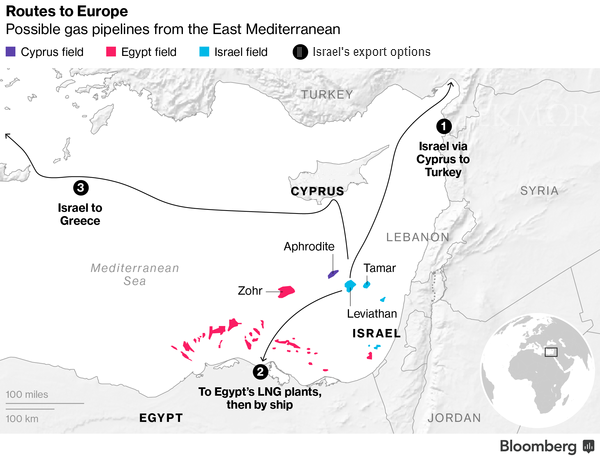
At issue is a long-standing border dispute over an 860 square kilometer area in the eastern Mediterranean near Israel’s natural gas fields.

Although Israeli and Lebanon do not have diplomatic ties, the former Trump administration brokered talks last year between the two countries in an effort to resolve that longstanding dispute.

Wednesday, March 7, 2018

US increases its Mediterranean naval presence as ExxonMobil begins Cyprus gas exploration - ENTERPRISE

Wednesday, 7 March 2018

Meanwhile, the East Mediterranean looks to be heating up, as the world reacts to Turkey’s bullying. The US has upped its naval presence in the Mediterranean as ExxonMobil dispatched drilling ships to Cyprus’ Exclusive Economic Zone (EEZ), Sputnik reports.

ExxonMobil is operating on a contract with Cyprus and Qatar Petroleum to explore for energy reserves off the Cypriot coast. 

The US “bolstering its presence in the region” comes after the Turkish military blocked drilling efforts in Cyprus’ portion of the EEZ twice last month. Cyprus lodged a formal protest with the UN against Turkey for its “repeated violations” and attempts at “undermining [Cypriot] sovereignty.” 

Turkey’s aggression came just as reports emerged that Egypt and Cyprus are nearing an agreement on establishing a natural gas pipeline, which could well turn Egypt into the export hub for East Mediterranean gas.

Sunday, June 25, 2017

Cyprus issues advisory for gas drill starting mid-July - REUTERS

Sun Jun 25, 2017 9:39pm GMTReporting By Michele Kambas; Editing by Andrew Hay

ATHENS, June 25 (Reuters) - Cyprus on Sunday issued a maritime advisory for a natural gas drill from July to October in a step opposed by Turkey, which challenges the divided island's jurisdiction to search for hydrocarbons.

The island has contractual obligations with France's Total which won an offshore exploration licence from the Republic and was scheduled to commence drilling this year.

It takes place as the United Nations plans to start a new bid in the coming week to end the decades-old conflict which has split Cyprus between Greek and Turkish Cypriots.

In an advisory on its website posted Sunday, Cyprus's Joint Rescue Coordination Centre said the West Capella drill ship would be conducting a 'drilling operation' off Cyprus from July 10 to Oct. 15.

Monday, June 12, 2017

Aoun urges Cyprus cooperation in oil, gas fields - THE DAILY STAR

President Michel Aoun welcomes Cypriot counterpart Nicos
Anastasiades at Baabda Palace. 
Jun. 12, 2017 | 03:03 PM

BEIRUT: President Michel Aoun Monday lauded bilateral cooperation between Lebanon and Cyprus, calling for increased coordination in offshore oil and gas exploration.

"I encourage the governments of the two countries to raise the level of cooperation in the fields of oil and gas," Aoun said in a joint news conference with his Cypriot counterpart Nicos Anastasiades.

Lebanon and Israel are locked in a dispute over a maritime zone that is believed to contain large quantities of natural gas. Lebanon is demanding the demarcation of the area with the help of the U.N. and other concerned parties.

Technically and legally, the United Nations does not have the mandate to demarcate disputed borders between countries.

However, Lebanese officials insist that the U.N. has an interest in taking steps to avoid an open conflict between Lebanon and Israel.

Wednesday, April 12, 2017

Turkey gas exploration raises eyebrows - KATHIMERINI

President Anastasiades of Cyprus (middle) with the leaders of
the other six southern EU nations
12.04.2017 : 21:52
Vassilis Nedos

Tensions between Nicosia and Ankara could escalate next week as there are fears that Turkish plans to perform deep-sea drilling and seismic surveys for oil and natural gas resources in the Eastern Mediterranean could be carried out within Cyprus’s exclusive economic zone (EEZ), where the island’s government announced on Tuesday it will conduct its own research.

Turkish Energy and Natural Resources Minister Berat Albayrak has said that his country will launch exploration – as early as next week – in the Mediterranean and Black Sea, and that it will be conducting more active two- and three-dimensional seismic surveys in both locations.

Friday, April 7, 2017

The Ministry of Foreign Affairs on the Press Release No:105 issued by the Turkish Ministry of Foreign Affairs - REPUBLIC OF CYPRUS

President Anastasiades (L), EU Commission President Juncker
07/04/2017 13:12

With reference to the press release, No: 105, issued by the Turkish Ministry of Foreign Affairs on 6 April 2017, the Ministry of Foreign Affairs of the Republic of Cyprus would like, once again, to reaffirm the determination of the Government of the Republic to continue its policy in the field of hydrocarbons thus fully exercising its sovereignty and sovereign rights in total respect of international and European law.

Sunday, March 12, 2017

No Cyprus solution: no UN and no gas? - IN CYPRUS / CYPRUS WEEKLY

March 12, 2017
Fiona Mullen

Efforts to solve the Cyprus problem are dying fast. In an interview with Kibris on Monday, the UN Special Advisor, Espen Barth Eide said something that should wake everyone up on this island.

Translated back from the Turkish, he said: “If the process fails, I have the feeling that it will not be possible to expect the UN to come again after a couple of years when things improve and give it another try. I don’t know. This is why I am worried. I would be more worried if I were living here. I hope I am wrong but I have to say that I am worried it will not be a smooth exit.”

This is diplo-speak for: “If you don’t come back to the table, don’t expect the UN to try again”.

Monday, March 6, 2017

National Dialogue “only way out of political stalemate in Libya” Egypt insists after LNA oil crescent reverse - LIBYA HERALD

Tunis, 6 March 2017

Egypt has insisted that dialogue is the only way Libya can extract itself from the current political crisis. Resuming the UN-brokered Libya Dialogue was of critical importance and would help safeguard the interests of its people, Egypt’s National Committee on Libya said stated today.

Libya, it added, had an “historic opportunity” to reach a political consensus bereft of outside interference to end the suffering of its people and ensure stability.

The committee is headed by Egypt’s Chief of Staff, Lieutenant-General Mahmoud Hegazy.

Thursday, January 5, 2017

Erdogan Joins Push to Reunify Cyprus as Access to Energy Beckons - BLOOMBERG

5 January 2017, 2:01pm EETPaul Tugwell, Georgios Georgiou

  • Officials say chance of ending frozen conflict best for years
  • Geneva talks offer prospect of stability in turbulent region
TEKMOR Note: Our guess is that these talks will produce no concrete result. The two sides are as far apart as they ever were, despite the optimism that many of the players, with the UN leading the pack, speak of. Put simply, the majority Christians want enhanced integration, whereas the Muslim minority insists on a segragationist interpretation of the charter. Last, and one aspect that is kept a diplomatic secret, is what happens to the vital British military bases on the island (co-managed with the USA), with or without a solution, which are tightly linked to the 1960 arrangement that gave birth to the internationally recognized Republic of Cyprus. We would not be surprised if Erdogan is going to Geneva merely to have his repeat Davos moment, against the leader of a far smaller nation than Israel, Cyprus.  

Monday, July 18, 2016

Lebanon to issue offshore gas exploration permits - GLOBES

18/07/2016, 18:50, Hedy Cohen

The Lebanese press reports that Lebanon will open its waters for new oil and gas exploration permits. One of the permits Lebanon intends to issue is still being contested by Israel.
In March 2013, Lebanon initiated a preliminary vetting process for gas companies which want to operate in the country. 12 international operators have passed this stage as well as 34 more non-operator firms. While Lebanon intended to provide ten offshore permits, the state's regulatory and political instability has led to delays with their issuing.

A source with connections in Lebanon's Ministry of Energy and Water told "Globes" that the discovery of Egypt's gas fields last year, as well as the Israel-Turkey reconciliation agreement (expected to promote a gas deal between the states), has led the ministry to push forward for an early publication of the permits during the last two weeks.

Monday, March 28, 2016

Berri: Ban was Receptive of Lebanese Request for U.N. to Demarcate Maritime Border - NAHARNET

28-3-2016

Speaker Nabih Berri revealed that the demarcation of Lebanon's Exclusive Economic Zone (EEZ) in the Mediterranean was among the issues he discussed with United Nations Secretary General Ban Ki-moon during his visit to the country last week, reported the pan-Arab daily al-Hayat on Monday.

Berri told the daily that Ban was “receptive of an official Lebanese request that the U.N. demarcate the Lebanon's EEZ, which borders Israel.”

This was a major topic of discussion between Ban and Prime Minister Tammam Salam as well, added the speaker.

Monday, May 26, 2014

The Continental Shelf Delimitation Agreement Between Turkey and “TRNC” | EJIL

May 26, 2014, Nikolaos Ioannidis*
Last month, Turkey submitted a note verbale to the Secretary-General of the United Nations setting out the geographical coordinates of its continental shelf in the Eastern Mediterranean, as established by a delimitation agreement with the “Turkish Republic of Northern Cyprus” (“TRNC”). The agreement was signed on 21 September 2011 and ratified by the Turkish government on 29 June 2012. A map published by the Turkish Ministry of Foreign Affairs depicting the agreement is pictured below. (The reasons why the “TRNC” is in quotation marks will be elaborated below.) By transmitting this document to the UN Secretary-General, Turkey sought to achieve the publication of the agreed coordinates in the Law of the Sea Bulletin (LSB), where official submissions by states regarding the law of the sea are published. Although Turkey has not acceded the UN Law of the Sea Convention (‘LOSC’), it acted in accordance with article 84(2) LOSC (due publicity of charts or lists of geographical coordinates regarding continental shelf delimitation). Nonetheless, the submission of Turkey was not listed as an official deposit on the website of the Department of Oceans and the Law of the Sea (DOALOS).


The Turkish approach on the regime of islands
The delimitation agreement outlines some of Turkey’s longstanding positions on the law of the sea. It deals only with the continental shelf and does not provide for the delineation of an exclusive economic zone (EEZ). While there is nothing precluding coastal states from choosing which maritime zones to claim and/or to delimitate, Turkey’s choice not to delimit an EEZ with the “TRNC” alludes to the Turkish position that islands in certain regions (implying the Aegean Sea) should not be entitled to claim maritime zones of their own other than territorial sea or should have reduced capacity to generate such zones. This stance was formulated in the context of the dispute between Turkey and Greece concerning sovereignty over the maritime space of the Aegean Sea;  since the 1970s, Turkey has sustained that the Aegean islands are situated on the continental shelf of Anatolia (Turkey) and, consequently, do not have a continental shelf of their own. This matter was an apple of discord between the Turkish and the Greek delegations over the course of the Third United Nations Conference on the Law of the Sea (‘UNCLOS III’). In the end, by virtue of article 121(2) LOSC, the Conference recognised the rights of islands to generate maritime zones. Article 121 LOSC reflects customary law (ICJ, Nicaragua v Colombia (2012), para 139) and, accordingly, applies to non-states parties as well.

Turkey’s resentment at the provisions on the regime of islands was one of the reasons it voted against and has not yet acceded to the LOSC (see Plenary Meetings 160 and 189). For the sake of clarity, it should be pointed out that when it comes to maritime delimitation, the maritime space an island can claim may be diminished depending on the circumstances (see, e.g., Anglo-French Arbitration 1977, Tunisia v Libya 1982, Black Sea Case 2009, Bangladesh/Myanmar 2012). Therefore, although in principle islands are not deprived of the rights bestowed on them by article 121 LOSC, they may not always be granted full effect in maritime boundary delimitations. However, islands cannot be denied their capacity to generate maritime zones and/or to be given decreased effect a priori; each case should be scrutinised according to its own unique terms. In any event, the Turkish argument that the Greek islands in the Aegean are located on the continental shelf of Turkey has been severely emaciated by the introduction of the EEZ concept and the prevalence of the “distance criterion” of maritime delimitation over the “geological” one. The distance criterion provides that the breadth of the maritime space afforded to a state should be calculated according to a fixed distance measured from the coast. The geological criterion, by contrast, would permit a state to claim the sea waters lying over the “natural prolongation” of its territory irrespective of the distance from its coastline. In the Nicaragua v Colombia case (2012), the ICJ put an end to the argument that one state’s islands cannot have their own continental shelf because they are located on another state’s continental shelf:
“The Court does not believe that any weight should be given to Nicaragua’s contention that the Colombian islands are located on “Nicaragua’s continental shelf”. It has repeatedly made clear that geological and geomorphological considerations are not relevant to the delimitation of overlapping entitlements within 200 nautical miles of the coasts of States.” (para 214).

The delimitation agreement
According to its well-established position that islands should not have the capacity to claim extended maritime zones when facing a bigger coastline, Turkey holds the view that Cyprus, being an island, has lesser effect in terms of maritime delimitation than the longer Turkish coastline, which is opposite the northern coast of Cyprus. Hence, as the agreement provides, the continental shelf delineation was carried out in accordance with equitable principles, resulting in a delimitation line closer to Cyprus at some points, which gives Turkey a more extensive maritime space than that allocated to the “TRNC”. Turkey was a fervent advocate of the equitable principles/relevant circumstances method during UNCLOS III, vehemently rejecting the median line/special circumstances method (UNCLOS III, Negotiating Group 7). The “equitable principles” method, which was elaborated in the 1969 Continental Shelf cases, stipulates that all relevant factors should be considered in order to reach an equitable result; however, the Court gave no further guidance as to how such an equitable result would be reached, rendering this method equivocal.

Although the debate over these two delimitation methods was intense, the LOSC did not manage to elucidate the vagueness surrounding the law of maritime delimitation; articles 74 and 83 LOSC merely strike a balance between the two opposing sides’ assertions. Nevertheless, there has been a growing trend towards assimilation of the two methods, early signs of which are discernable in several cases before international tribunals [Anglo-French Continental Shelf Arbitration (para 148), Jan Mayen case (para 56), Qatar v Bahrain case (para 231)]. At the moment, the view supporting the integration of the two methods seems to prevail [International Tribunal on the Law of the Sea (ITLOS) Bangladesh/Myanmar case (para 238)].

Of course, the looming reconciliation of these delimitation methods does not preclude states from agreeing to designate their maritime boundaries using only one of them. In the case under consideration, though, things are not that simple. Turkey concluded an agreement with a regime established in the aftermath of the Turkish military invasion of Cyprus in 1974, which entailed use of force in violation of article 2(4) UN Charter. The “TRNC” was established in 1983 in northern Cyprus, which has been occupied by the Turkish Armed Forces since 1974. Security Council resolutions 541/1983 and 550/1984 condemned this secessionist action and reaffirmed that the sole legitimate government on the island was the Republic of Cyprus. Furthermore, the European Court of Human Rights resolved that the “TRNC” is a “puppet state” under the “effective control” of Turkey [Loizidou v Turkey, App. No. 15318/89 (18 December 1996) paras 56 and 57; Cyprus v Turkey, App. No. 25781/94 (10 May 2001) paras 77, 78 and 80; Xenides-Arestis v. Turkey, App. No. 46347/99 (22 December 2005) para 27]. Also, the ICJ confirmed the illegality of the regime established in northern Cyprus in the Kosovo Advisory Opinion(para 81). Thus, the regime in northern Cyprus is illegal and cannot claim statehood, as it is ‘a putative state emerged … with the assistance of foreign military intervention’ (James Crawford, The Creation of States in International Law, 2nd edn OUP 2006, p. 144).

Conclusion
Consequently, the continental shelf delimitation agreement between Turkey and the breakaway “TRNC” is not valid under international law, as the latter party is not a legitimate state entity. It thus cannot be accepted by the DOALOS as a lawful submission and be published in the LSB. As expected, the foregoing development triggered a reaction from the Republic of Cyprus and Greece, whose governments deplored the submission and deemed the agreement unacceptable. Another controversial matter to be contemplated is whether this agreement would be binding upon the Republic of Cyprus should a solution to the Cyprus Problem –which concerns the enduring occupation of northern Cyprus by the Turkish Armed Forces since 1974- be reached, given the unequal terms of the delimitation. Further, it will be interesting to see whether Turkey will be keen to conclude any maritime delimitation agreements with Greece in the Aegean Sea/Eastern Mediterranean in light of the discovery of hydrocarbon deposits therein and, if so, according to which method such delineations will be effected.

This incident illustrates the pivotal role international law can play in international relations. Turkey, a non-state party to the LOSC, realised that unless it acted in conformity with international law, the delimitation agreement would not have any legal standing. Therefore, it followed the rules set forth by the LOSC regarding the deposit of geographic coordinates of the continental shelf purporting to legitimise the agreement, even though the instrument in question cannot have any legal consequences due to the unlawfulness of the “TRNC”. Although a non-state party to the LOSC, Turkey was willing or compelled to conform to rules with which it disagrees in order to promote its interests. Moreover, this incident supports the argument that observing international law norms is the best way for states to pursue their legitimate rights. The law of the sea must be the tool for resolving disagreements on maritime affairs in the region, especially in view of the discovery of new oil and gas resources and the prospective benefits they hold for states of the region.

* Nikolaos A. Ioannidis is a PhD candidate in Public International Law at University of Bristol. His doctoral thesis focuses on the application of the Law of the Sea in the Eastern Mediterranean in light of the discovery of hydrocarbon deposits in the seabed and subsoil of the region. Other fields of interest: Law of Armed Conflict, Constitutional Law, Jurisprudence.


Source