Showing posts with label Oil Product Subsidies. Show all posts

Thursday, September 21, 2017

EGPC pays $6.2 billion in arrears to foreign oil firms - EGYPT TODAY


Thu, Sep. 21, 2017

CAIRO – 21 September 2017: The Egyptian General Petroleum Corporation (EGPC) paid $6.2 billion to foreign companies in arrears during the fiscal year (FY) 2016/2017, which in turn prompted companies to accelerate their activities in the oil and gas fields, EGPC Chairman Abed Ezz el-Regal said Thursday.

He added that EGPC paid a total amount of $19.3 billion and LE 38 billion (in local currency) to the companies, during the same period, to buy oil and repay loans.

Thursday, June 29, 2017

Egypt raises fuel prices by up to 50% under IMF deal - HYDROCARBON PROCESSING / REUTERS

6/29/2017Reporting by Abdelrahman Adel; Additional reporting by Amina Ismail; writing by Patrick Markey; editing by Mark Heinrich

CAIRO (Reuters) — Egypt on Thursday hiked fuel prices by up to 50% to help meet terms of a $12 B IMF loan deal, a sharper rise than expected by many struggling with soaring living costs and a further test of President Abdel Fattah al-Sisi's popularity.

Fuel price increases had been widely anticipated as part of Egypt's loan accord with the International Monetary Fund and Thursday's measures were the second rise since the government floated the pound currency in November.

Government officials say spending cuts will help revive an economy where subsidies have accounted for about a quarter of state expenditures. But austerity carries risks for Sisi as inflation and a contested deal to hand two Red Sea islands to Saudi Arabia have eroded his public standing.

Tuesday, March 21, 2017

Gov’t timeline to cut down on subsidies ends in 2019 - ENTERPRISE / AL SHOROUK

Tuesday, 21 March 2017

Gov’t timeline to cut down on subsidies ends in 2019: The government does not plan to fully eliminate fuel subsidies, said Oil Minister Tarek El Molla in an extensive interview with Al Shorouk. The timeline to reduce spending on fuel subsidies will end in 2019, but the government will keep paying for fuel subsidies after that, he added. It is worth noting that Egypt had only committed to “reducing fuel subsidies” in its agreement with the IMF for the USD 12 bn loan, but had agreed to a complete phase-out of subsidies for electricity in the coming five years. Other takeaways from the interview:

Sunday, April 10, 2016

Egypt to cut fuel subsidies as govt seeks to reduce deficit - AHRAM ONLINE / REUTERS

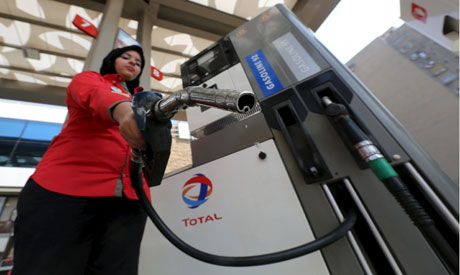
A female employee poses with a fuel pump at a petrol station
in Cairo, Egypt February 24, 2016. (ReUters)
Reuters , Sunday 10 Apr 2016

Egypt will reduce spending on fuel subsidies by nearly 43 percent in the 2016/17 budget due mainly to lower global energy costs, officials said on Saturday.

Finance Minister Amr El-Garhy told a news conference state energy subsidies would fall to 35 billion Egyptian pounds ($3.94 billion) from about 61 billion pounds in the 2015/16 budget.

Consumers reacted angrily when the government cut spending on energy subsidies in mid-2014, a measure that caused domestic prices of natural gas, diesel and other fuels to rise by as much as 78 percent. They were reduced again in the current budget.

Wednesday, March 9, 2016

Beware False Hopes in the East Med - NATURAL GAS EUROPE

March 09th, 2016

The Eastern Mediterranean contains a cluster of proven gas fields that are capable of contributing significantly to both national and regional energy security. But there is a very real danger that the peoples of all three countries that have so far discovered gas in their waters -- Egypt, Israel and Cyprus -- may suffer from false expectations.

In Israel, there is a need to explain the paradox that export-led development is necessary if the giant Leviathan field is to be harnessed for domestic use as well; in Egypt, it concerns the government's desire to eliminate domestic price subsidies at the same time as the country's biggest gas discovery is due to come on stream; in Cyprus, it's about the contrast between finding a relatively modest field, Aphrodite, and officially-raised hopes that Cyprus may be able to replicate discoveries on the scale of Egypt's Zohr or Israel's Leviathan and the role this could play in furthering a settlement to the island's 40-year-old partition.

Sunday, January 17, 2016

Five year plan for Egypt’s oil sector revealed | Energy Egypt - Daily News Egypt

JANUARY 17, 2016 / ENERGY EGYPT

During the previous fiscal year (FY) 2014/2015, the oil and gas demand increased by 0.5m tonnes to a total of 73m tonnes. The share of demanded oil was 38m tonnes, of which 36% was fuel oil, 36% was gas oil, 16% gasoline, and 11% LPG.


The Egyptian government has been taking several steps to manage the fuel shortage and ameliorate the investment environment for international foreign partners. In previous announcements, Minister of Petroleum Tarek El-Molla said the ministry is aiming to secure the local demand with reasonable prices. He introduced several measures through which the government can follow through on its goals. Daily News Egypt exclusively illustrates the Petroleum Ministry’s plan for energy security and financial sustainability and reviews the ministry’s prediction for the demand of oil and gas for the next five years.

Monday, January 11, 2016

Oil Minister Says Egypt 'Suffering' From Fuel Subsidies | ABC News


By MARAM MAZEN, ASSOCIATED PRESS CAIRO — Jan 11, 2016, 12:26 PM ET

Egypt's petroleum minister said Monday the country is "suffering" due to fuel subsidies, saying these funds are better diverted to other areas such as health care and education.

Tarek el-Molla, speaking at a conference in Cairo, showed in a presentation that between July and September 2015, the government paid 42 percent of the cost of 92-octane gasoline, which is used to fuel private vehicles owned by more affluent Egyptians.

While a liter of 92-octane gasoline cost 4.5 Egyptian pounds (57 cents), it sold at 2.6 pounds (33 cents) at the pump, a graph in his presentation showed. El-Molla also highlighted similar disparities in the true cost and selling price of other fuel products.

"I meant to show you this graph to let you feel the challenge and how Egypt is suffering from the subsidy," el-Molla told the conference. "Can you believe that all of us coming today at this event in our vehicles and our cars, the government is subsidizing us?"

He said this was the first time he had spoken about the topic this openly.

President Abdel Fattah el-Sissi had cut fuel subsidies in 2014 by more than 70 percent, in a move that caused a public outcry but was welcomed by economists as a necessary step to save public funds for much-needed development projects.

El-Molla declined to share a timeline or the government's plans for future fuel subsidy cuts, saying announcing these plans ahead of time could prompt people to hoard gasoline to sell at a higher price later.

He said money spent on fuel subsidies should "at least get reduced to a reasonable number by which this money can be directed to health care, education, that would help the development of the country."

SOURCE

Monday, December 14, 2015

Egypt aims to reduce oil product subsidies | Reuters


Egypt aims to reduce oil product subsidies

Mon Dec 14, 2015  


CAIRO Dec 14 (Reuters) - Egypt is relaxing a commitment made by the previous government to abolish subsidies on gasoline, diesel and natural gas, following a slide in crude prices and the discovery of an offshore gas field.
The previous government had committed to getting rid of the subsidies that were diminishing the country's foreign currency reserves over a five-year period starting in July 2014.
Prime Minister Sherif Ismail said on Monday that Egypt now planned to reduce the subsidies to 30 percent of where they stood in July 2014, over the same time period.
"We respect the previous government's decisions and are committed to them, but there are changes we need to adhere to in the case of oil product subsidies, such as global energy prices and new discoveries," Ismail told a news conference.
He said lower global oil prices and the discovery of a massive offshore gas field meant Egypt could relax that goal.
The Zohr gas field, discovered by Italy's Eni, is the biggest in the Mediterranean. With an estimated 30 trillion cubic feet of gas, it is expected to plug Egypt's acute energy shortages and save it billions of dollars in precious hard currency that would otherwise be spent on imports.
Egypt is suffering from a foreign exchange shortage that has seen goods pile up at ports. About $6 billion was deposited in Egypt's central bank by Gulf Arab allies earlier this year to help replenish its dwindling foreign currency reserves.
Ismail is due to meet Saudi Arabian Deputy Crown Prince Mohamed bin Salman on Tuesday, when a new Saudi deposit will be on the agenda, he said.
The government is also targeting growth in gross domestic product of close to 6 percent and a reduction in its budget deficit to 8.5 percent by the end of the 2017-18 financial year, Ismail said. (Writing by Ahmed Aboulenein; editing by David Clarke) 

© Thomson Reuters 2015 All rights reserved
Source